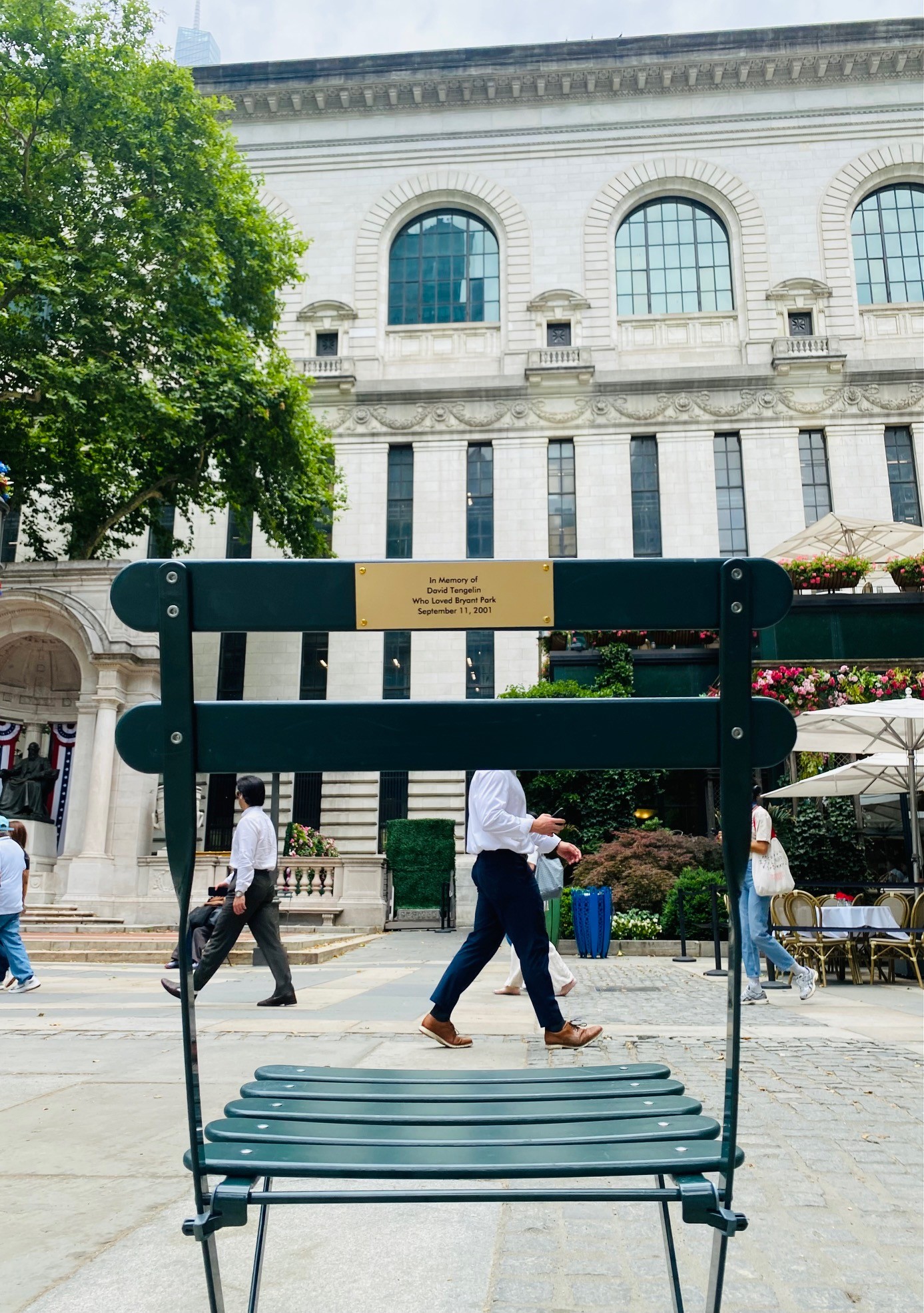
The chair sits where it has always belonged.
Behind it rises the New York Public Library. To one side, café umbrellas shade afternoon visitors. Office workers move through the park with purpose. Leaves stir above the cobblestones. Nothing in the scene announces itself as extraordinary. It is simply Bryant Park on an ordinary summer day.
Only the plaque on the back of the chair suggests otherwise.
It reads:
In Memory of
David Tengelin
Who Loved Bryant Park
September 11, 2001
Most people walking past will never stop to read it. Bryant Park was never meant to be a memorial. It is a living public space. People come to meet friends, eat lunch, play chess, attend films, sit in the sun, or simply spend time in the city.
That is precisely why the chair matters.
It remains part of the life of the park.
My brother David loved Bryant Park long before a plaque carried his name. Long before anyone thought of memorial chairs. Long before anyone imagined that his connection to the park would outlast him.
Bryant Park was part of how David learned to live in New York before New York became home.
When he arrived on January 4, 1999, he was twenty-two years old and entering a city he barely knew.
The journey had taken three days by bus.
In his journal, he described feeling nervous as the bus left Newark for its final approach to Manhattan. He had slept little. He had not eaten in more than a day. The moment he entered Port Authority he was approached by a homeless man and pretended to be perfectly comfortable in surroundings that were entirely new to him.
After a phone call to a hostel and a cab ride through Midtown, he arrived at a one-story yellow brick building on West 12th Street. From the street it looked abandoned. The windows were blacked out. There were no signs of life.
Inside, however, he found a temporary home among travellers, students, and newcomers trying to find their footing in the city.
The timing was difficult.
He did not yet have his work authorization. Without it he could not properly apply for jobs. He did not have a Social Security number. He did not have a permanent address. He did not have his own phone number.
What he did have was time.
And every day he had to find somewhere to spend it.
The hostel closed during the daytime. Guests were expected to leave. January was cold. Snow lay on the streets and in the parks. Like countless newcomers before him, David gravitated toward one of New York's great civic institutions.
The New York Public Library.
The library offered warmth. It offered books. It offered public computers. It offered a place where a person with very little money could sit for hours without being asked to buy anything.
In 1999, before smartphones placed the internet in every pocket, those public computers served as a lifeline.
He came almost daily.
He checked email. Filled out applications. Looked for work. Planned what came next.
The library appears again and again in memories of those years.
One day he witnessed an argument over computer time. Someone had exceeded the allotted fifteen minutes. Voices rose. Finally one man shouted, “Okay, you wanna take it outside!”
David loved telling that story.
He appreciated the absurdity of it.
Even then he was learning New York by observation.
When spring arrived and the snow disappeared, another place became part of his routine.
Bryant Park.
The transition was natural. The library stood on one side. The park began on the other.
He could move between them without thinking about it.
Spend the morning in the library.
Spend the afternoon in the park.
Write.
Watch people.
Return the next day.
For someone still finding his footing in the city, Bryant Park offered something difficult to define but easy to recognize: room to belong before belonging had fully arrived.
Nearly a century before David carried résumés through Midtown Manhattan, Edith Wharton had placed another uncertain New Yorker in the same park.
In The House of Mirth, published in 1905, Lily Bart reaches Bryant Park during one of the most difficult periods of her life. Exhausted and unsure of what comes next, she arrives seeking something modest but essential: a place to stop.
A place to sit.
A place to gather herself.
Wharton understood that public spaces sometimes matter most when people have nowhere else to go.
Nearly a century later, David would find himself walking the same paths for reasons not entirely different.
He was not fleeing society as Lily Bart was. His circumstances were far less dramatic. Yet he too had arrived in New York carrying uncertainty about what the future would hold.
And he too found refuge in the neighborhood formed by the library and the park.
That uncertainty did not last.
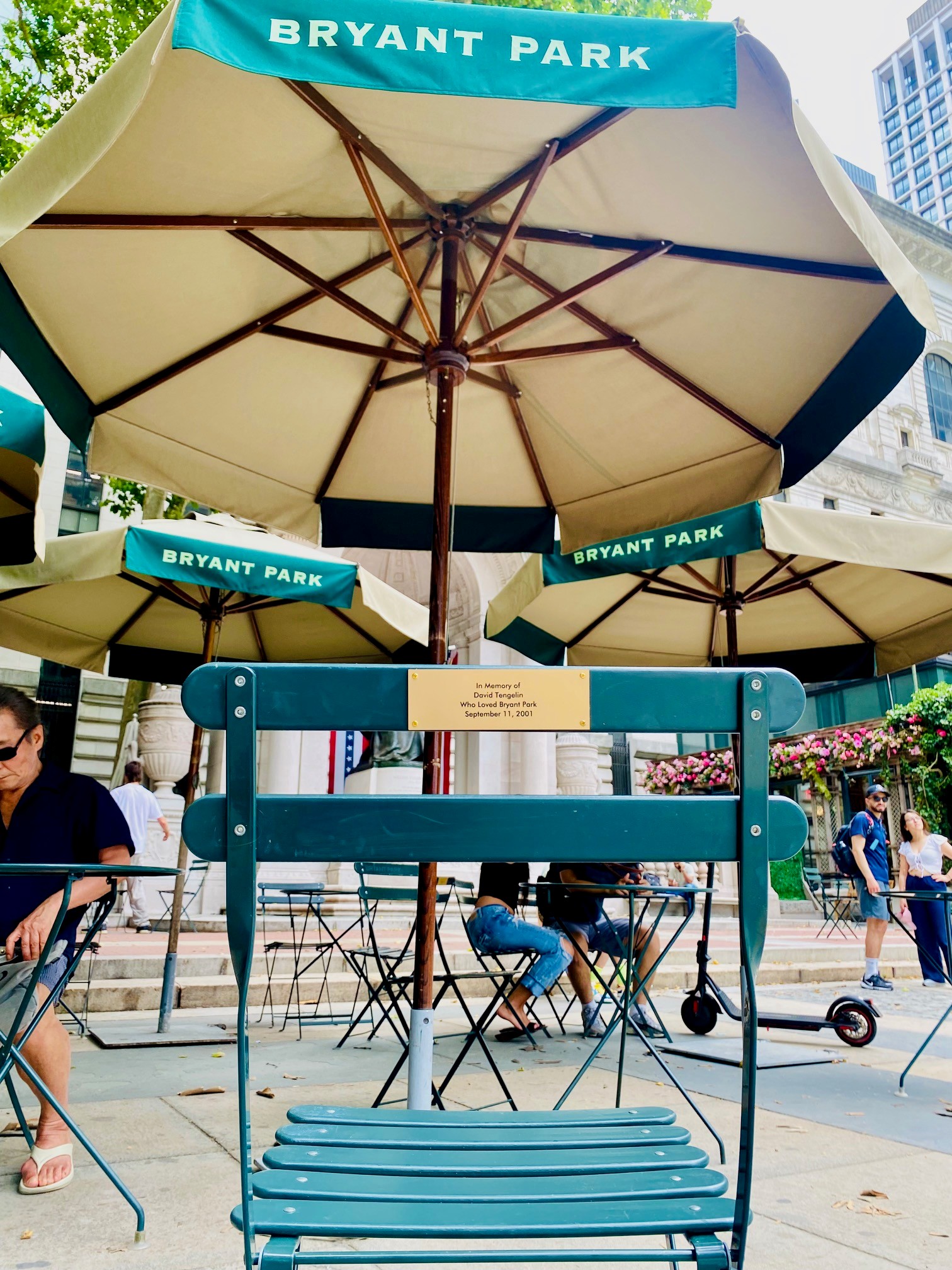
Over time New York became less a destination than a life.
Jobs arrived. Friends arrived. Routine arrived.
The city that had first appeared overwhelming began to reveal its patterns.
By the summer of 1999, his journal already captured the rhythms of daily movement through Manhattan. Walking to work became a competitive sport. Pedestrians moved at a brisk pace. Coffee stands became pit stops. The city moved quickly, and he was learning how to move with it.
He was no longer observing New York from the outside.
He was participating in it.
What began as uncertainty gradually became belonging.
If Edith Wharton's Bryant Park helps explain the beginning of David’s relationship with the park, another writer helps explain why that relationship endured.
In 1930, journalist and social observer Mary Heaton Vorse described Bryant Park as a place where people from different walks of life shared the same public space.
Her observation remains remarkably accurate.
Some parks separate people.
Bryant Park mixes them.
Office workers sit beside tourists.
Students sit beside retirees.
Readers sit beside chess players.
Conversations drift between languages.
People arrive for different reasons but briefly share the same space.
This quality mattered deeply to David.
Years before New York, he attended the American Community School of Cobham, England, an international environment where classmates came from many countries and backgrounds. It was more than an American school. It was a small world assembled in one place.
Something about that atmosphere stayed with him.
It helps explain why he later loved New York.
It helps explain why he loved the United Nations.
When I visited him during the summer of 1999, one of the first places he wanted to show me was the United Nations Headquarters. He knew the guided tour almost by memory. He loved the General Assembly Hall. He loved the idea that people from across the world gathered in one place and attempted, however imperfectly, to understand one another.
Bryant Park offered a smaller version of that same experience.
Not diplomats.
Not heads of state.
Just ordinary people sharing a public space.
But the underlying attraction was similar.
The world gathered there too.
Beneath striped umbrellas and London plane trees, people lingered over coffee while others drifted across the park or paused for a few minutes before continuing their day. Some opened books. Some unfolded newspapers. Some simply sat and watched the afternoon unfold around them.
The park did not require people to justify their presence.
That was part of its gift.
Monday nights brought summer films. David often arrived hours early to claim space for himself and his friends. He watched films there. Met friends there. Spent long afternoons there. Returned again and again.
The park had become woven into the fabric of his New York life.
By the spring of 2001, the uncertainty that had marked his first months in the city was largely behind him.
On March 10, 2001, he stood at the windows of the North Tower and looked out across Manhattan.
“It’s when I walk up to the window in our new offices on the 100th floor of One World Trade Center that I realise how incredibly lucky I am.”
Below him stretched the city he had worked so hard to join.
“I see Manhattan laid out at my feet almost like a roadmap.”
It is difficult to read those words now without feeling the satisfaction they contain.
The journey he had begun in January 1999 had succeeded.
He had found his place.
Six months later, his New York story ended.
What followed belongs to history.
What remains belongs to Bryant Park.
In 2002, our family learned that Bryant Park had read about David’s affection for the park in a memorial published in the Swedish-American newspaper Nordstjernan.
Representatives of Bryant Park contacted us and offered something unexpected.
A memorial chair.
On the first anniversary of September 11, we met with members of the park staff and were presented with a green Bryant Park bistro chair bearing a plaque in his honor.
It remains one of the most thoughtful acts of remembrance our family has ever received.
Until that moment, David had a relationship with Bryant Park.
Now Bryant Park acknowledged that relationship in return.
Nine years later, Bryant Park became part of another act of remembrance.
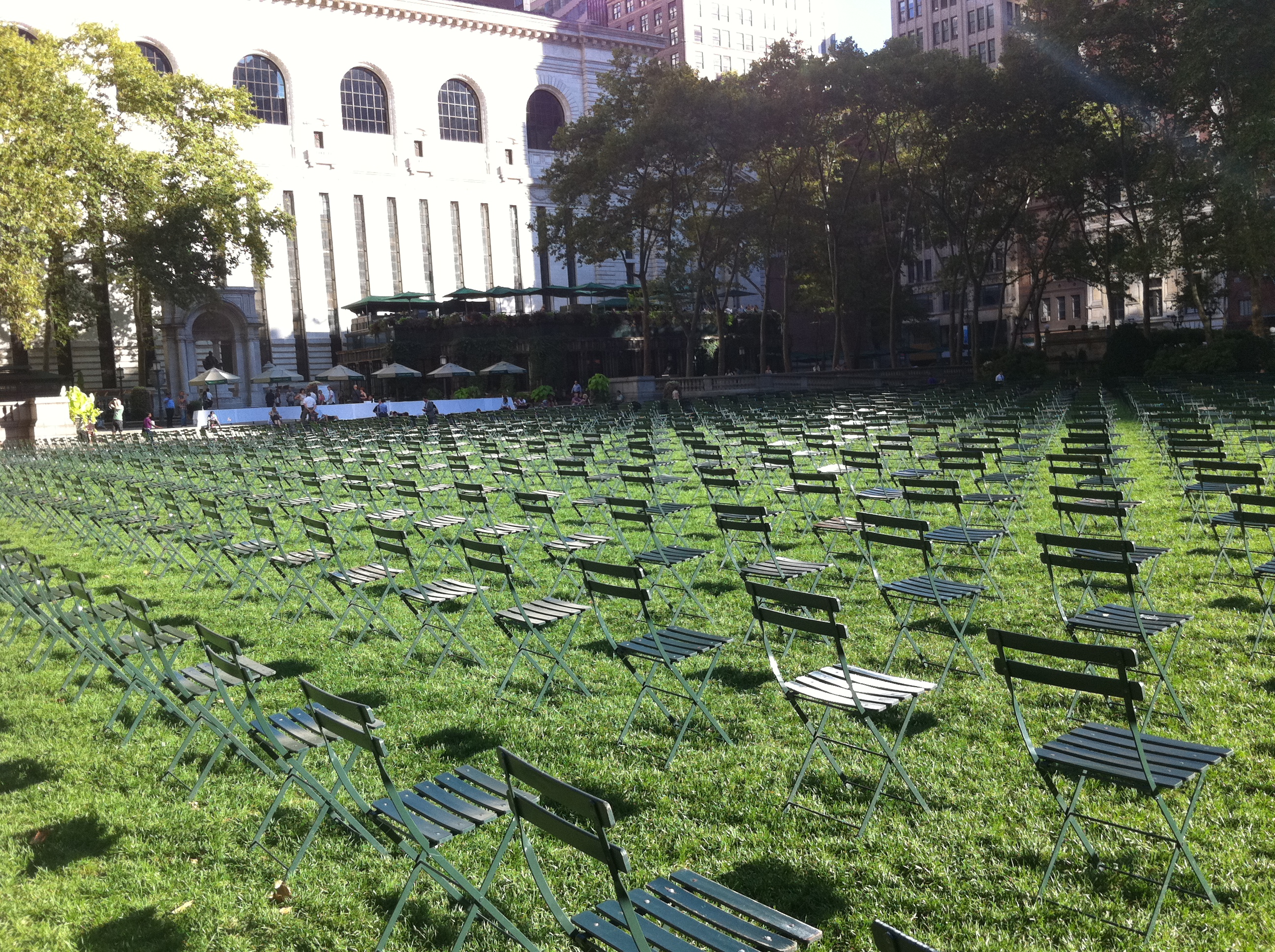
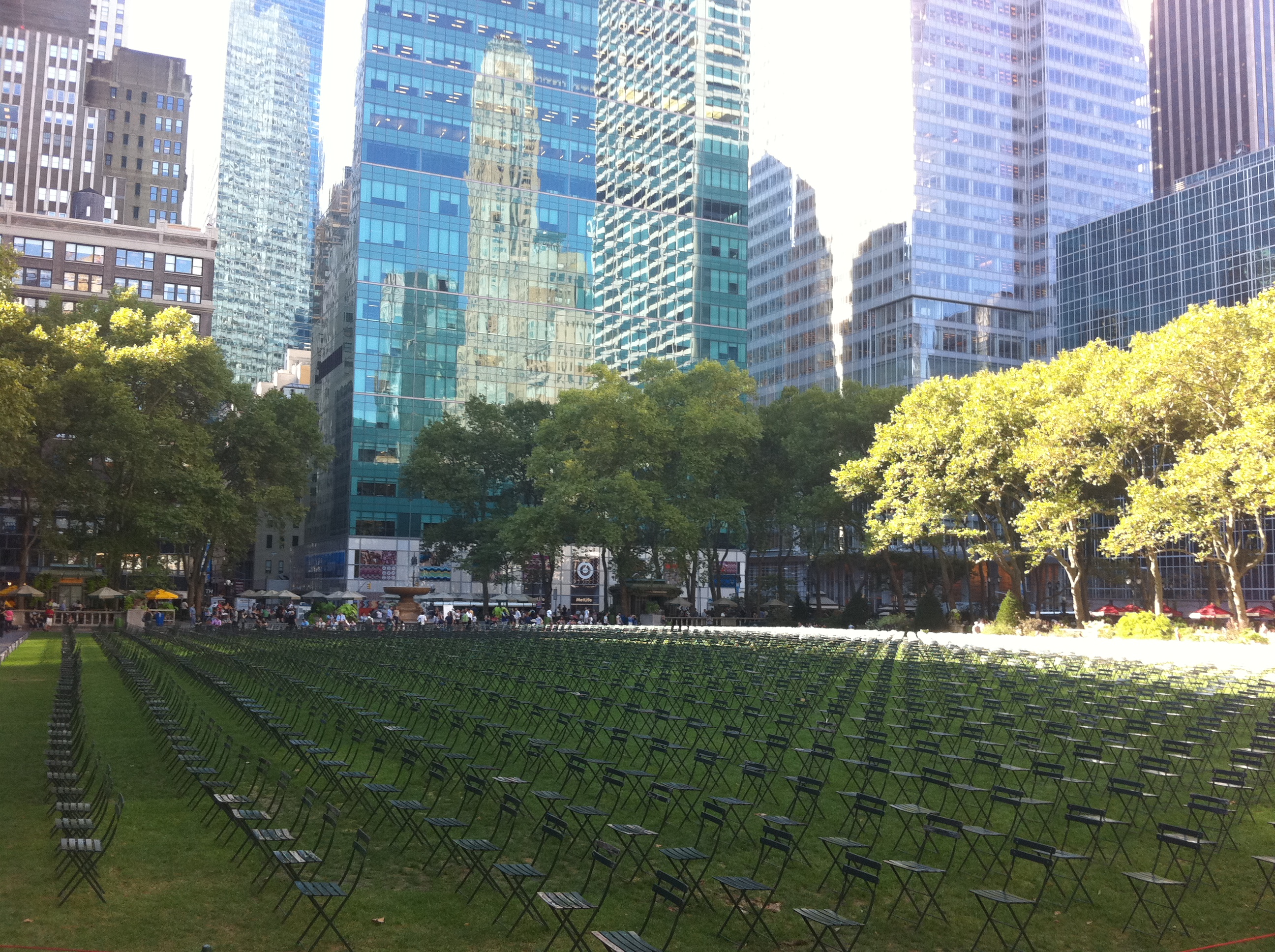
For the tenth anniversary of September 11, the lawn was covered by 2,753 empty green chairs — one for every life lost at the World Trade Center.
For three days in September 2011, the familiar lawn disappeared beneath rows of empty seats.
Visitors viewed the installation from the surrounding paths and terraces.
Every chair faced south toward the former site of the Twin Towers.
I was there.
The photographs remain among the most powerful images I have ever taken.
One shows the vast field of chairs stretching toward the New York Public Library.
The other reveals their scale from the opposite direction.
Together they preserve a moment of public remembrance that transformed Bryant Park for three days in September 2011.
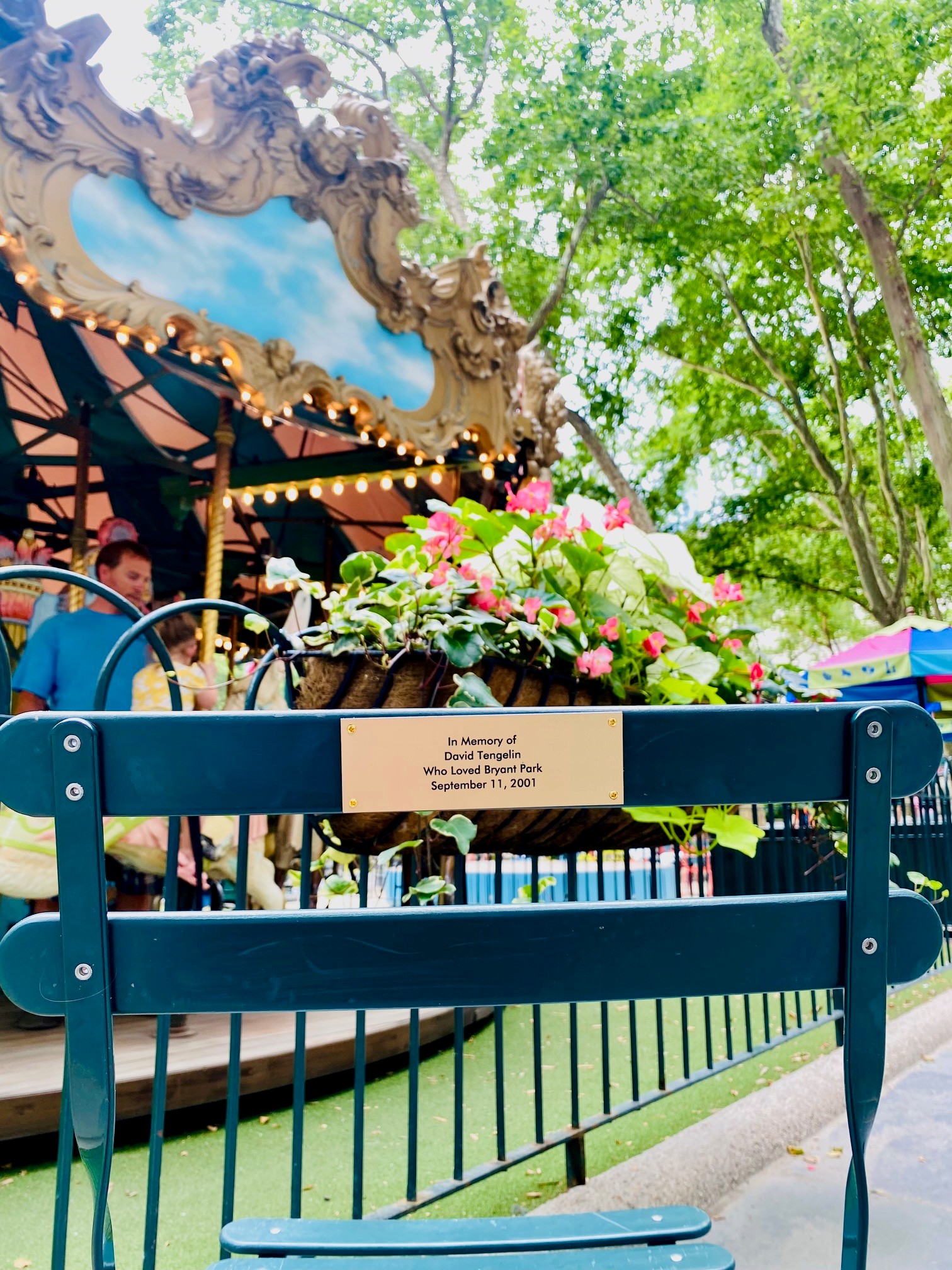
In one of the photographs taken after the plaque was renewed, the chair stands in the foreground. Behind it, a father rides the carousel with his daughter.
Flowers border the path. Trees fill the background.
Summer continues around them.
The carousel opened in Bryant Park in 2002, the same year the memorial chair was first presented to our family.
Children who ride it today have no reason to know the name on the plaque.
Nor should they.
The chair stands quietly among the ordinary life of the park.
I sometimes think about the sequence of years.
In 1905, Edith Wharton placed Lily Bart in Bryant Park searching for a place to rest during a difficult chapter of her life.
In 1930, Mary Heaton Vorse described Bryant Park as a democratic civic space where people from different walks of life gathered together.
In 1999, a twenty-two-year-old newcomer arrived in New York carrying uncertainty, ambition, and a notebook.
He discovered both versions of the park.
The refuge.
And the community.
In 2001, the chapter he had worked so hard to create came to an abrupt end.
In 2002, Bryant Park acknowledged that connection in a way that still endures today.
In 2011, his chair stood among thousands of others in remembrance.
In 2026, the plaque was renewed.
The sequence stretches across more than a century.
Longer than any individual life.
Longer than any individual memory.
That continuity is part of what moves me.
Memory is often imagined as passive.
In reality it requires maintenance.
Archives must be preserved.
Stories must be retold.
Even remembrance itself requires stewardship.
The plaque must be renewed every three years.
Without renewal, it disappears.
I intend to continue renewing it for as long as I am able.
Not because the chair is a historical artifact.
Not because obligation demands it.
But because preserving the chair preserves a relationship.
Bryant Park helped David during the uncertain beginning of his New York life.
Renewing the chair is my way of ensuring that his place in the park remains part of its story.
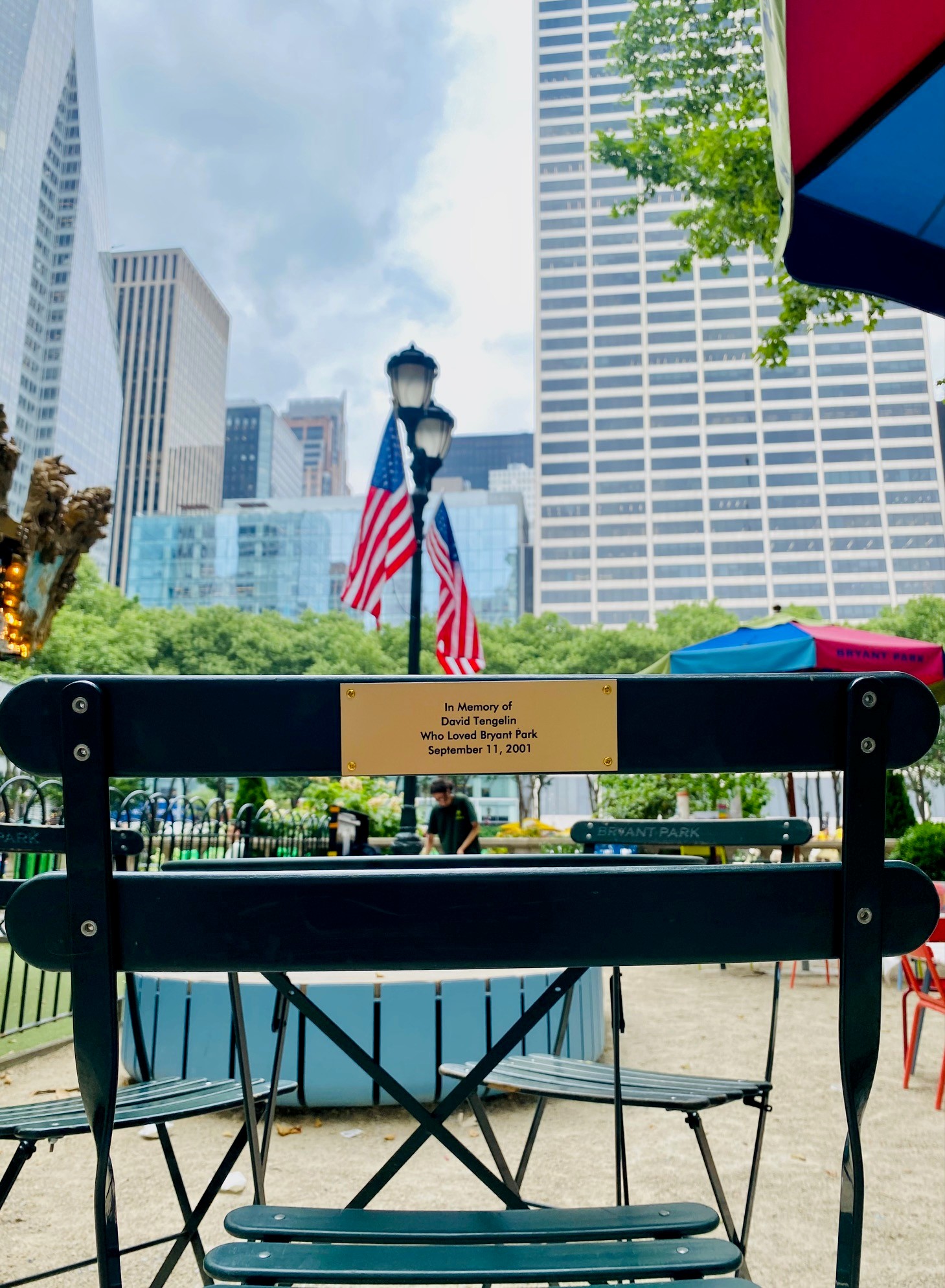
Today, the renewed chair can be found in the park my brother loved.
Nearby, people drink coffee beneath umbrellas.
Someone clears a table after a guest has left.
Flags move above the trees.
Office workers move through the park.
Children ride the carousel.
The city continues.
The plaque records a name.
The park supplies the rest.
Not through biography.
Not through monuments.
But through the kind of place David chose to spend his time.
A place where strangers share the same public life for a little while.
A place where uncertainty and belonging have long existed side by side.
The reasons that first drew David to Bryant Park are still present there.
And so is the chair.